Treatment
The type of treatment for Tumours of the CNS will depend on type (benign vs. malignant), and position of the tumour, and whether it has metastasized. Recent years has seen great strides in the ability to treats cancer patients, several methods of treatment have been developed for tumours:
- Surgery
- Chemotherapy
- Radiotherapy
Surgery
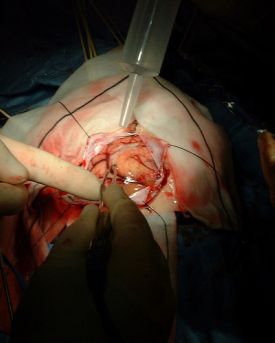
The aim of surgery is to completely remove tumours without causing further damage to surrounding tissues, however surgeries of the CNS are alway dangerous and can result in death. These days with the advance surgical techniques most benign tumour can easily be treated by the surgical removal the tumour. Surgery can be effective in the early course of tumour development (i.e. before transition of benign to malignant) depending on the size of the tumour and the position (as certain positions within the CNS are impossible to operate, e.g. cerebellum). Surgery can however also damage the surrounding normal tissues. If the tumour has spread to multiple sites, surgery is used in combination with other therapies
|
image courtesy of Flickr under creative commons license:https://www.flickr.com/photos/photoplasia/97416562/ |
Chemotherapy
Chemotherapy is usually drugs which targets the site of the tumour. They are toxic drugs which can kill cancer/tumour cells, but unfortunately also neighboring healthy tissues. They can be used on its own to stop tumour or after surgery to prevent new tumour forming at site of tumour removal. There a lots of different chemotherapy drugs, each working differently, but most work by impairing the cells mechanism to enter mitosis, other cause the cell to enter apoptosis.
Radiotherapy
Also called radiation therapy, uses ionized radiation in order to damage the DNA in tumour cell. Damage would then cause the cell to enter apoptosis, and removing them. There are two different ways radiation therapy is used:
- Directly- High beam energy to DNA to damage it
- Indirectly- which ionizes water molecules, resulting in breakdown of the molecule, causing free radicals (OHˉ) to damage the DNA.
A side effect of radiotherapy depends on the dosage use and the length of exposure. But the general side-effects are fatigue, edemas, potential chance of infertility, hair loss, on some cases even death.
Usually All these will be used in combination, in order to increase the chance to treat tumour, but they also increase chance of side-effects